
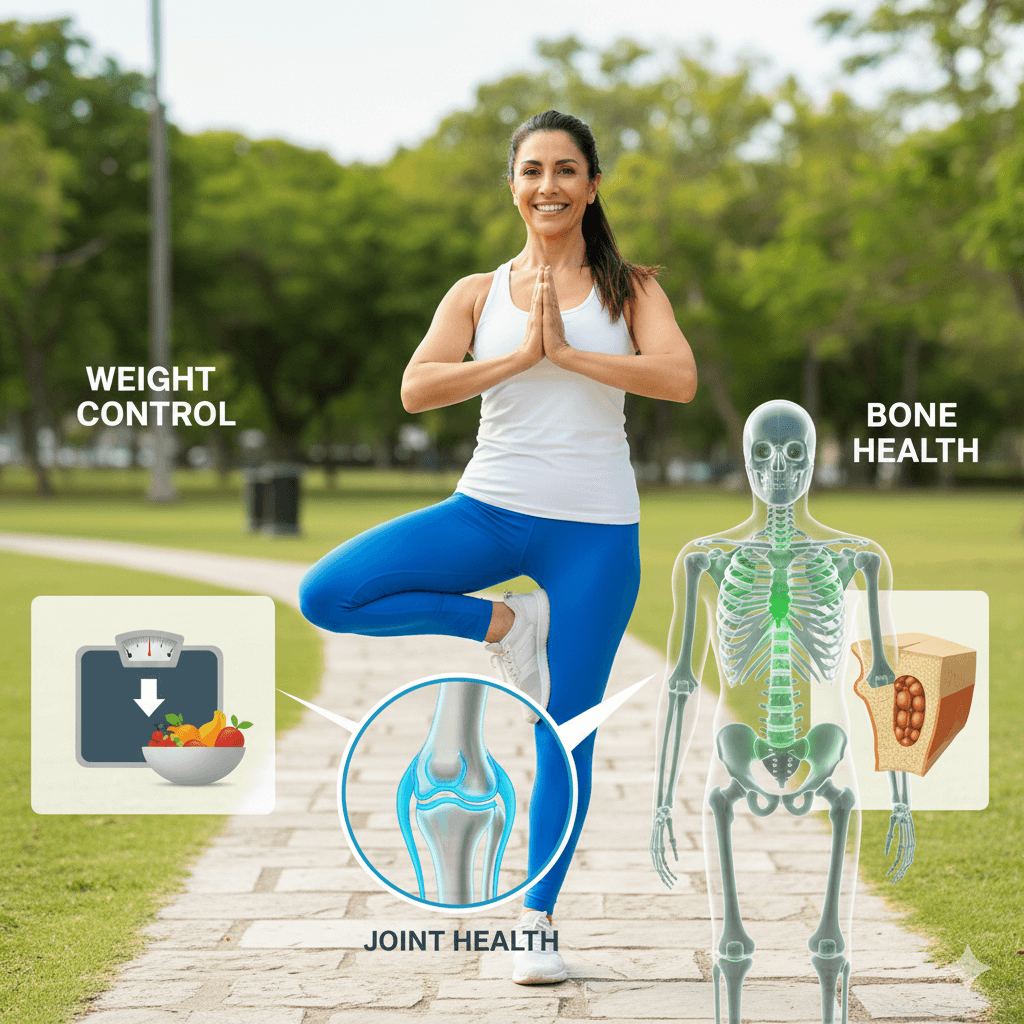
The most accessible exercise on Earth
You do not need a gym membership, special equipment, or athletic experience to walk. It is a low-impact, full-body movement that humans evolved to perform for hours each day. Yet modern life has reduced our average daily step count to a fraction of what our bodies expect.
Research published in major medical journals consistently shows that walking 30 minutes a day, five days a week, delivers measurable improvements across nearly every marker of physical and mental health.
Cardiovascular benefits
Walking at a brisk pace elevates your heart rate enough to strengthen the heart muscle, improve circulation, and lower blood pressure over time. Studies show that regular walkers have a significantly reduced risk of heart disease and stroke.
- Blood pressure: Walking helps arteries remain flexible, which naturally supports healthy blood pressure levels.
- Cholesterol: Regular walking can raise HDL (good) cholesterol and lower LDL (bad) cholesterol.
- Circulation: Improved blood flow delivers more oxygen and nutrients to every cell in your body.
- Heart rate: Over time, your resting heart rate decreases as the heart becomes more efficient.
Mental clarity and mood
Walking stimulates the release of endorphins and brain-derived neurotrophic factor (BDNF), a protein essential for learning, memory, and neuroplasticity. Even a single 30-minute walk has been shown to reduce symptoms of anxiety and lift mood.
- Walking outdoors in nature amplifies the mental health benefits through exposure to green spaces and natural light.
- Regular walkers report improved focus, creative thinking, and problem-solving ability.
- Post-meal walks help stabilize blood sugar, which supports steady energy and reduces brain fog.
- Walking meditation combines movement with mindfulness for deeper stress relief.
The Stanford creativity study
Research from Stanford University found that walking increased creative output by an average of 60 percent. Whether indoors or outdoors, the act of walking itself opens the mind to divergent thinking and fresh ideas.
Weight management and metabolism
While walking may not burn as many calories per minute as running, its sustainability makes it a powerful tool for long-term weight management. Consistent walkers maintain a higher baseline metabolic rate and experience fewer cravings.
- A 30-minute brisk walk burns approximately 150 to 200 calories, depending on body weight and pace.
- Walking after meals improves insulin sensitivity and helps regulate glucose levels.
- Unlike intense exercise, walking rarely triggers compensatory overeating.
- Building a walking habit is more sustainable than most gym routines, leading to better long-term adherence.
Joint health and longevity
Unlike high-impact exercises, walking supports joint health by encouraging the production of synovial fluid, the natural lubricant that keeps joints moving smoothly. This makes it ideal for people of all ages, including those with arthritis or previous injuries.
- Walking strengthens the muscles around your knees, hips, and ankles without excessive strain.
- It improves balance and coordination, reducing the risk of falls as you age.
- Large-scale studies associate daily walking with a 20 to 30 percent reduction in all-cause mortality.
"Walking is man's best medicine."
- Hippocrates
How to build a lasting walking habit
The most effective walking routine is one that you enjoy and can maintain consistently. Start with where you are and build gradually.
- Begin with 10 to 15 minutes if 30 minutes feels overwhelming. Add five minutes each week.
- Walk at a pace where you can hold a conversation but feel slightly out of breath.
- Choose a consistent time each day. Morning walks help establish circadian rhythm; post-dinner walks aid digestion.
- Use routes with gentle elevation changes to increase challenge without overexertion.
- Walk with a friend, listen to a podcast, or explore new neighborhoods to keep it interesting.
The evidence is clear: a simple daily walk is one of the most powerful, accessible, and sustainable health interventions available. Lace up your shoes, step outside, and let your body do what it was designed to do.